CCSP Comparative Whitepaper — BMC, Lean Canvas, SWOT, 5 Forces, Golden Circle, MBTI/DISC
The business world is never short of tools, but it lacks a system that can "integrate various tools into a language".
CCSP (CORP. & COOP. Sail Plan) is the first plan to achieve this simultaneously:
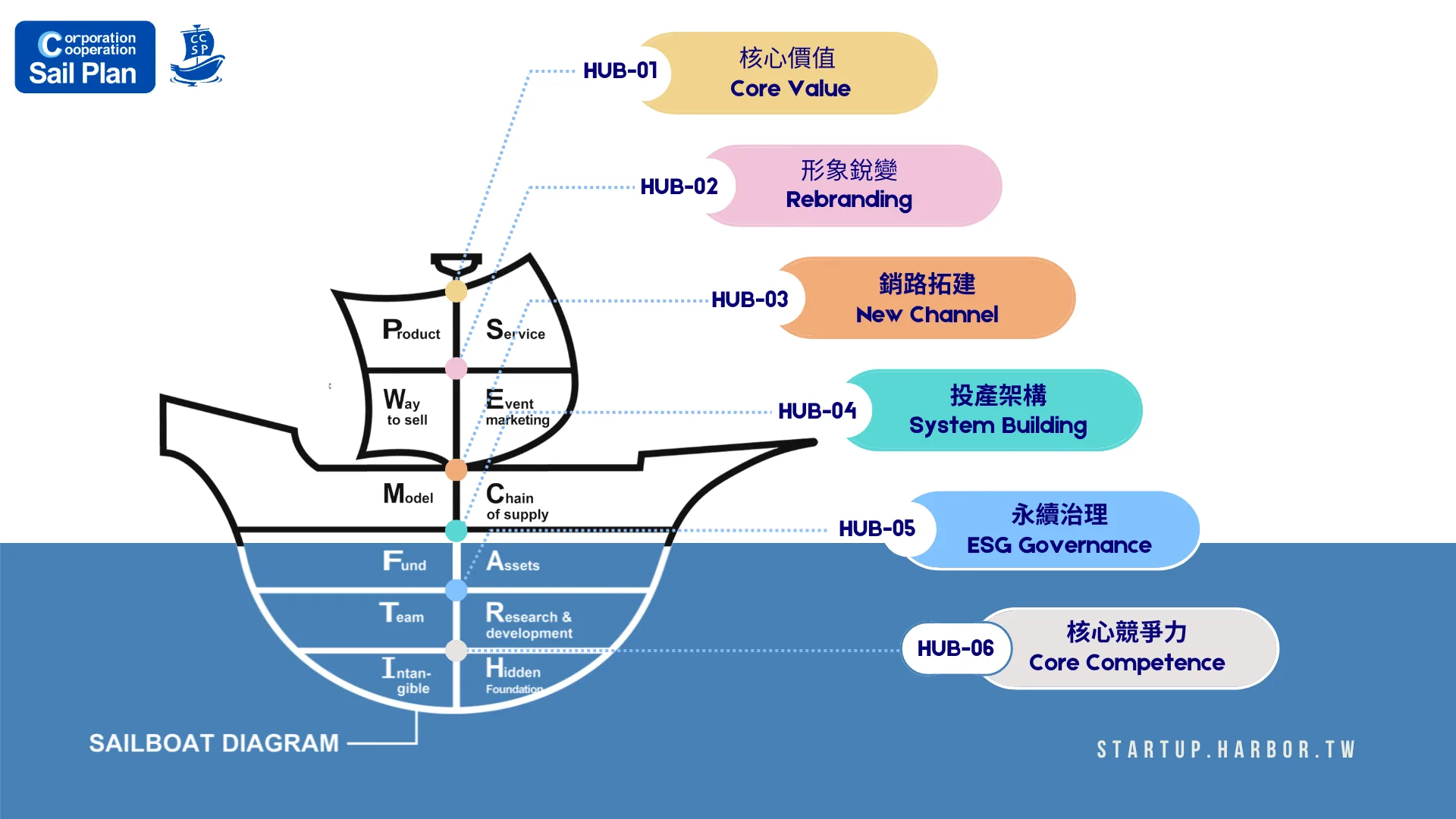
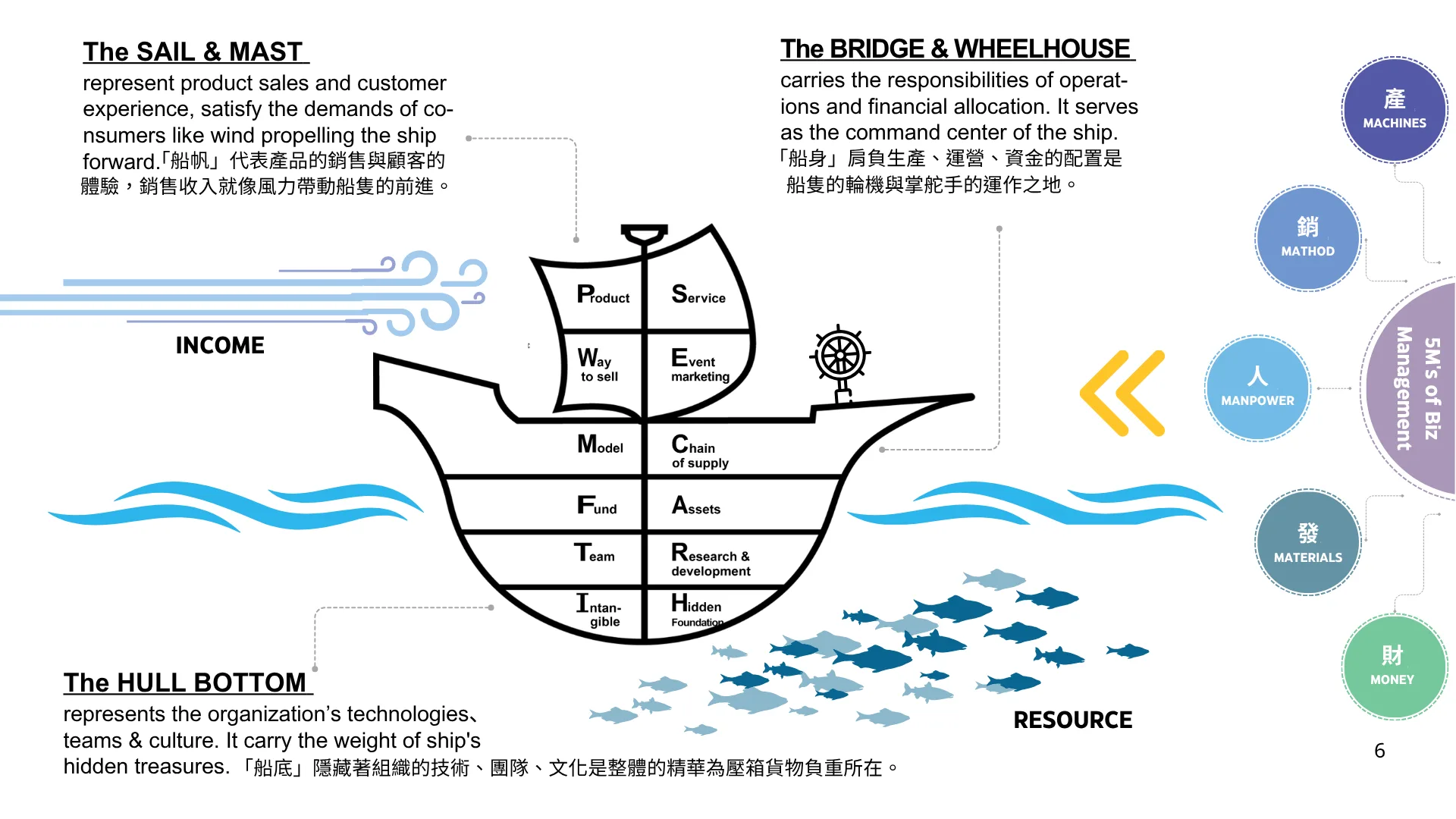
✔ Decompose 12 enterprise resource blocks
✔ Analysis of 6 major HUB nodes (L/R bias)
✔ Place Core Value × Core Competence on the same central axis (and form a loop).
✔ Simultaneously covers "Enterprise Diagnosis (ASSMT)" and "Business Personality (ANCHOR)".
CCSP is not just a framework — it is a commercial language.
They only look at "external competition in the industry" and ignore the internal operations of the company.
limit:
✘ Failure to manage internal resources ✘ Inability to present the company's core structure ✘ Inability to integrate culture, team, and heritage
CCSP Advantages:
→ Consider both the "external market" and the "internal resource structure".
Simple but not structured.
limit:
✘ List the problems but cannot explain the causes ✘ Unable to connect to decision-making and culture
CCSP Advantages:
→ Revealing the "root cause of the formation of strength and weakness".
It was one of the earliest tools to "attempt to integrate core values." However, it is still insufficient to present the "internal skeleton of an enterprise."
limit:
✘ Core Value (VP) can only be placed in the middle and cannot be integrated with Core Computing (CC) into a single axis. ✘ Key Resources lack depth. ✘ Lack of internal system logic.
CCSP Breakthrough:
→ Place "core value × core competency" on the same central axis and allow the two to operate dynamically through value loops.
It places more emphasis on MVP, pain points, and experimentation, but lacks a comprehensive perspective on corporate structure.
limit:
✘ Failure to showcase the depth of the team and technology ✘ Ignoring foundational knowledge and intangible assets
CCSP Advantages:
→ It doesn't just describe the pain points, but the "whole ship".
They describe "personality".
ANCHOR describes:
🟦 Business Disposition
It refers to the personality traits a person displays when "running a business".
✔ 6HUB Left/Right Tendency ✔ 4 Major Business Types (3L4L / 3R4L / 3L4R / 3R4R) ✔ 64 Boat-Shaped Personality Types
The terms WHY / HOW / WHAT refer to the brand's purpose, but lack a "resource structure" and "personality."
CCSP Integration in One Go:
WHY = HUB-01 (Core Value)
HOW = HUB-02~04 (Strategy and Process)
WHAT = Upper-layer four blocks (products and services)
WHO = ANCHOR (Management Personality)
Golden Circle gives purpose. CCSP gives an operating system.
| Tools Framework | Internal Structure? |
Personality? | Core Value? | Core Competence? |
Visual Model? |
CV × CC Same Axis? |
|---|---|---|---|---|---|---|
| Porter's Five Forces | ✘ | ✘ | ✘ | ✘ | ✘ | ✘ |
| SWOT | ⚠ | ✘ | ✘ | ✘ | ✘ | ✘ |
| BMC | ⚠ | ✘ | ✔ | ⚠ | ✔ | ✘ |
| Lean Canvas | ⚠ | ✘ | ✔ | ⚠ | ✔ | ✘ |
| MBTI / DISC | ✘ | ✔ | ✘ | ✘ | ✘ | ✘ |
| Golden Circle | ✘ | ✘ | ✔ | ✘ | ⚠ | ✘ |
| CCSP | ✔ 12-block structure | ✔ ANCHOR system | ✔ | ✔ deep structure | ✔ Ship Diagram | ✔ Only model achieving CV × CC integration |
CCSP is the first system to integrate both simultaneously:
✔ Core Value ✔ Core Competence ✔ 12 Resource Blocks ✔ 6 HUB Nodes ✔ 64 Ship Archetypes ✔ Enterprise Assessment (ASSMT) ✔ Value Loop
CCSP is not just a tool — It is the commercial language for next-generation founders.